Retail Bags
Grip Seal Bags Sealable and Resealable Bags Plastic Bags Retail Bags
For all your retail bag needs

Retail bags
Buy crystal clear polypropylene display bags to make any product or retail display sparkle.
Try this extensive range of carrier bags for the best selection of the popular retail bag used by shoppers everywhere.
Retail bags are…
- Any bags used within the retail sector, including...
- Shopping bags, carrier bags, display bags, produce bags, packing bags and mailing bags
- Available in a range of styles, shapes, sizes and thicknesses to suit the job in hand
- Used to support every aspect of a retail business, from displaying products (display bags) to packing food or other items (packing bags) and allowing customers to collect produce (produce bags) to helping them carry their shopping home (carrier bags)
- Usually made from polythene, although some retail bags are made from other materials
- Often available in a biodegradable alternative to polythene (e.g. biodegradable carrier bags), thus helping to show your customers that you care about the environment
- Also made from paper (e.g. brown or white paper bags, take away carriers, high end flexiloop shopping bags)
The term ‘retail bags’ is used to describe a wide variety of bags used within the retail sector to cover a range of tasks from storing to carrying products and making life easier for both the retailer and the consumer alike.
Retail bags actually included a number of other ranges of bags that have their own specific name - including but not limited to carrier bags, produce bags, packing bags, mailing bags and others - and are a standalone type of bag in their own right. They are grouped together under the broad term ‘retail bags’ as they are all used within the retail environment.
Things people say about grip seal bags
Grippa bags work well in select-face storage because the closure has to survive constant handling, not only one tidy first seal. When the film gauge is uneven, the bag mouth can twist, the seal line can miss, and small parts are more likely to spill amid stock checks or topping up a tray. A steadier film retains its shape, opens cleanly and closes squarely, which makes life easier at a busy secondary packing bench where items are being counted in and out all day. That sort of consistency reduces fiddly resealing and retains mixed stock in better order.
Zip Seal Bags Large Sale
Zip seal bags are often selected because they make handling faster and tidier on the packing line. A superb press-close track retains loose components, paperwork, samples, or small food packs together without the additional step of heat sealing, so operatours can transport through jobs with less errours. The bag still has to suit the load, though, because film that is also light can split at the corners or creep below pressure when stacked in a tote. When gauge, size, and seal quality match the contents, the pack is easier to manage and far less likely to fail amid daily handling.
Gripper bags rely on the fluted surface doing a very practical job: keeping the layers apart so the film does not cling flat and shut off the opening. That small air channel lets the bag spread properly and sit against the duct wall instead of resisting it, which matters when a secure grasp is needed below load. If the film is also stiff, the bag stays crabbed and awkward; if it has also much recovery, it snaps back and loses contact. Good performance comes from balancing flute form with polythene suppliers behaviour, and that balance normally determines whether the bag grips cleanly or gives trouble on the shop floor.
Grip Seal Bags Market Is Set To Experience Revolutionary Growth By 2028
Grip seal bags have to earn their place through consistent closure, not by looking tidy on a spec sheet. The bag body requirements enough body to resist stretch, while the seal lip must retain locking after repeated opening and closing, or small parts start drifting out in storage and handling. If the gauge is also light, the bag can creep, split at the seal, or distort when packed into secondary cartons; if it is also heavy, resin use and freight weight rise for no useful earn. Good production control retains the film stable on fast lines and avoids waste from poor sealing or uneven draw. That balance is what retains these bags useful on the shop floor and acceptable in the warehouse.
packaging manufacturers launch heavy duty grip seal bags
Heavy duty grip seal bags need above additional thickness if they are going to cope with rough handling. A thick film can still fail when the plastic is brittle, badly blended or also stiff to absorb knocks from sharp metal fixings and other small parts. The proper test is how the gauge, toughness and seal profile work together when the bag is filled, moved and opened several times on the shop floor. A superb bag grasps its shape without cracking at the corners or stretching open along the seam. That saves time at packing and reduces the sort of split bag that can stop a job dead.
Black grip seal bags are often chosen when the proper issue is control, not only packing. The dark film cuts out light, which assists keep safe contents that can disappear, label or lose quality amid storage on an open select-face or in a busy warehouse rack. That makes them useful for rubber parts, coloured powders and small assembly kits that need to stay clean, separated and prepared for fast issue. The packaging supplierble strip also saves time because items can be opened and closed repeatedly without heat sealing or additional tape. A bag that retains stock tidy and easy to handle normally pays for itself in less mix-ups.
Labelled grip seal bags reduce sorting errours because the product identity stays attached to the contents instead of depending on a loose ticket that can be misplaced amid handling. That matters in kitting, repairs, and small-parts picking, where screws, clips, fittings, and similar items often pass through several hands before last dispatch. A transparent label also assists when products are split into secondary packs, since mixed batches can be spotted before they turn into complaints or returns. The bag requirements enough gauge to retain its shape in trays and tote boxes, and the seal strip must close cleanly after each opening. That makes daily picking faster and retains order in the pack stream.
packaging supplierble bags for vertically presented booklet cards need a film spec that follows the shape and handling of the pack, not only the size on paper. A booklet card stands awkwardly between a flat insert and a boxed unit, so the bag has to stay transparent, open reliably, and still close again after repeated use without becoming stiff or cloudy. If the gauge is also heavy, packing slows down and pallet occupy suffers; if it is also light, edge wear and rough treatment soon display up as scuffing or split seals. The better selection is normally a controlled polythene suppliers film with proper running behaviour and a closure strip that stays honest through the secondary packing stage. That retains presentation tidy and avoids turning a simple item into a troublesome line problem.
50x 11cm X 16cm Self Seal Bags Gadget Jewelry Finger Rings Holders
Self seal bags in the 11cm by 16cm size work optimal when the film and closure are matched to the product and the line speed. A bag that feels light in the hand can still cause trouble if the adhesive strip does not bite cleanly, because loose seals enable small parts to slip into crates, bins or mixed orders. Consistent gauge control assists the polythene suppliers stay flexible without turning flimsy, so the pack still stands up to rubbing from sharp edges. That makes filling quicker and reduces the kind of handling damage that slows dispatch.
Mini grip bags need tight control on conversion because small changes in gauge, seal pressure or reseal strip shape fast display up on the packing line. If the film is also soft, the bags can cling together in the stack and force operatours to spend time separating them before filling or counting parts. That slows output and raises the chance of misfeeds, which often leads to hurried rework and scrap. A well-manufactured bag opens cleanly, feeds properly and lets the job retain moving without constant fiddling.
Retail bags and polythene
The vast majority of retail bags are made from polyethylene, more widely known as polythene, in a range of thicknesses to suit the task in hand. The thickness of the polythene - also known as the gauge or density - varies from very thin, as with thin counter bags - at just 9 microns thick - to thick, as with premium quality carrier bags such as clip-close carrier bags - at 75 microns (300 gauge) thick.
Not all retail bags are made from polyethylene, or polythene, however. Some retail bags, like takeaway bags for example, are made from paper, while others, like gift bags, are made from cardboard.
But as this website is all about retail bags and the most common form as retail bags are polythene bags, this website will be focussing on polythene bags in these pages.
Carrier bags - the number one retail bag
By far and away the most popular form of retail bag, carrier bags are employed by retailers in every corner of the globe, making them the big daddy of the retail trade as far as polythene bags are concerned.
Carrier bags are designed to allow the customer to carry purchased products from the shop to their homes or businesses in an ergonomic manner. The bags come with different types of handle styles to allow the customer to carry the bag. Many types of handle give the bag its name, with some of the popular styles including: vest carriers, patch handle carriers and patch handle carriers.
Other popular types of carrier bag, not named after their handle, include varigauge carriers - so named because the thickness, or gauge, of the polythene is twice as thick at the top of the bag as at the top - and premium carriers, popular in the top-end fashion outlets or department stores.
Whatever type of business you own, there is a carrier bag out there for you. Whether you need cheap and cheerful or reassuringly expensive, you can always find the carrier bag to get the job done, but you can also use them to send a message to your customers about your business too.
Other popular types of retail bag
Whilst carrier bags are comfortably the most commonly used bag by the retail sector, there are many other forms of bag that perform an important role for retail businesses everywhere. These include:
Produce bags - Used by food retailers from mega-size supermarkets to small local butchers, thin light produce bags are an essential item for any food retailer. Available either on the roll or served loose from a packet, food bags can be used both from behind the counter - e.g. a butcher bagging up a pound of mince - or at front of house, as with the tear-off bags used in supermarkets to collect loose fruit.
Display bags - Employed by retailers who want to display their products in the best possible light, crystal clear display bags make products sparkle. Manufactured from high clarity polypropylene - similar to cellophane but clearer, thicker, stronger and cheaper - these bags are used for presenting a range of products, including greetings cards, magazines and sweets. Also available in sleeve form, as used with flowers and CDs to make them shine.
Mailing or postage bags - These polythene mailers, complete with integral sealing strip, are the perfect way to deliver products to your customers. Lightweight and waterproof, poly mailers are a great alternative to traditional envelopes. They are available in a range of styles and in plain or coloured polythene. You can also get your mailing bags printed with your very own company logo, branding or slogan, so that they really stand out from the crowd and make your business the most memorable one in any batch of mail.
Gift bags - The most popular retail bag that isn’t made of polythene, gift bags are a great way to present a gift to friends, loved ones or colleagues without having to even wrap it! No need to wrapping paper, scissors, cellotape or minutes of your life wasted trying to make a gift look nice. Just place your present in you shiny gift bag - complete with a smart cord handle and your gift will look just fantastic. Available in standard shape for regular everyday presents like books, CDs or jewellery, or in bottle gift bags - the perfect way to present any bottled gift from champagne to a fine Scotch whiskey.
Where to buy retail bags
Retail bag manufacturers and suppliers include:
Paper Bags
The website that caters for all of your paper bag needs, Paper Bags is the ideal online destination for anyone buying paper take away carriers, shopping bags or other paper bags. Also a very useful resource on biodegradable packaging.
www.paperbags.co
Display Bags
If you want to buy or find out more information on high clarity polypropylene display bags, then this is the website for you. A firm favourite with retailers who wants to make their products sparkle!
www.displaybags.org.uk
Plastic Food Bags
A fantastic website for anyone looking to buy plastic food bags or produce bags at discount prices. Contains tonnes of information and details of where to buy polythene food bags - the best way to keep your food fresh and help customers handle fresh food from the shelf.
www.discountfoodbags.co.uk
Polythene Bags
A website dedicated to polythene bags used in the retail sector, including food bags, display bags, carrier bags, printed carrier bags and mailing bags. If you work in the UK's retail sector and need polythene bags, this is the website for you!
www.ukpolythenebags.co.uk
Gift Bags
A useful source of information on gift bags and retail display bags - used to enhance product displays for everything from greetings cards to flowers and clothes to sweets. Featuring a handy display bag size guide, news on display bags and eco-friendly alternatives.
www.giftbagsdirect.co.uk
Retail Bags
The home of retail bags and shopping bags online. If you're looking for bags to your shop or retail outlet, from plain or printed carrier bags to display bags, then take a look at this very handy website.
www.retailbags.co.uk
Kraft Bags
Kraft Bags is a website specialising in kraft bags and other paper bags - a fantastic environmentally-friendly alternative to traditional polythene shopping bags.
www.kraftbags.org
Carrier Bags
Work in the retail sector? Looking for carrier bags or other retail bags for your shop? This website has it covered, with tonnes of information and details of where to buy a range of carrier bags and other retail bags, including food bags and glossy display bags.
www.retailbags.org

Research & Resources
For plenty more information on the broad range of retail bags available, including how they are manufactured and how they benefit the retail sector, please visit:
PlasticBags.uk.com: Popular polythene packaging directory listing a large selection of specialist retail bags websites and allowing retailers to product listings for free.
Goldstork: This 'best-of-the-web' free directory features a range of specialist websites on display bags and other retail bags, plus hand-picked information and carefully selected features.
PackagingKnowledge: The UK's premier plastic packaging knowledge website features loads of in-depth articles and detailed information on a huge range of retail bags, including carrier bags, mailing bags and display bags.
Printed carrier bags - the ultimate retail bag
If carrier bags are the number one retail bag, then printed carrier bags take them one step further and make them kings of the retail bag world.
The choice of carrier bags you choose for your retail outlet can say a lot about your business, even when you’re using off-the-shelf plain carriers. But if you take that carrier and the print your very own personalised message or design on the side of the bag, then you’ve got the ultimate way to send a message about your business.
Create your very own custom-made design, complete with company logo, advertising slogan or bespoke design - including seasonal designs like those employed during sales or at Christmas - and you can get just the message you want out there not just to your own customers picking up the bags, but to every other potential customer that sees them walking around with your professional, personalised, printed carrier bag.
Turn your customers into walking adverts for your retail outlet with your very own printed carrier bag. The difference between having a forgettable bag and an instantly memorable one could be the difference between your shop or store making it in the cut-throat world of retail.
Biodegradable retail bags
A number retail bags manufactured from traditional polythene - as listed elsewhere on this page - are also available made from biodegradable materials so that, when they need to be disposed of, they don’t contribute to landfill. The biodegradable material from which these bags are made will degrade 100% on prolonged contact with compost or soil, meaning that you make less of an impact on the environment.
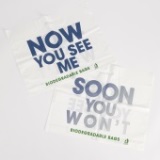
What’s more, courtesy of a small green logo placed on all of the bags, your customers will know that you care about the environment too.
The following retail bags are available in biodegradable alternatives: biodegradable carrier bags, biodegradable mailing bags, biodegradable clear bags (for presenting your products) and eco-friendly bin liners (for keeping your shop clean).